
Your organization
FOR DISABILITY & CARE ORGANIZATIONS
Medical ID Programs for Disability & Care Organizations
Person-centered emergency information that travels with the participant.
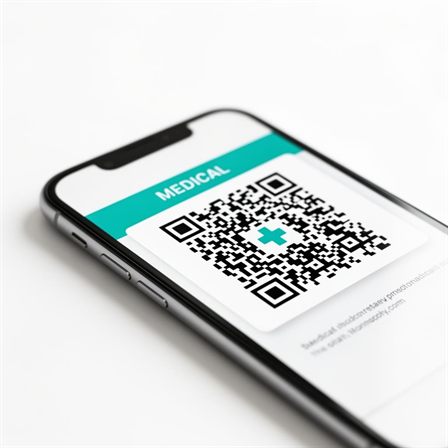
Give participants a connected Medical ID that can carry selected emergency, contact and support information beyond the organization. Individuals and families control the profile, while responders can open selected information in a browser by scanning the ID. No responder app or account is required.
Programs can begin with a defined participant group and expand across programs, locations or communities.
PARTICIPANT PROGRAM
Person-centered profiles. Family and caregiver context. QRepublik behind the scan.
Your organization
Offers the Medical ID program to participants
Participant / family
Creates and controls the Medical ID profile
QRepublik
Connects the profile to a QR-enabled Medical ID
Responder
Opens selected emergency information in a browser
PARTICIPANT PROGRAM
A connected Medical ID program without turning QRepublik into your records system.
- Defined
- participant group to start
- Person-centered
- profile control
- No app
- required for responders
- Updated
- without replacing the ID
PARTICIPANT PROGRAM INQUIRY
Discuss a participant Medical ID program.
Start with a defined participant group and a clear support context. Participants, families or caregivers maintain the profile according to the account setup used.
Lead capture happens before scheduling. After submission, scheduling a conversation is optional.
How the participant program model works
Your organization offers the program. Participants and families create and control the profile. QRepublik connects that profile to a QR-enabled Medical ID that can be scanned by a responder.
Participant / family
Creates and controls the Medical ID profile
QRepublik
Connects the profile to a QR-enabled Medical ID
Responder
Opens selected emergency information in a browser
Why disability and care organizations use it
QRepublik gives organizations a practical way to offer connected Medical IDs while keeping the profile centered on the participant, family and caregiver context.
Information travels with the person
Selected emergency, contact and support information can stay with the participant beyond the organization's location.
Useful across daily contexts
The same Medical ID can support transportation, activities, appointments and unfamiliar emergency situations.
Lower responder friction
A responder can open selected information in a browser without installing a special QRepublik app.
Families stay involved
A participant, family member or caregiver can help keep the profile current, depending on the individual's situation.
How the participant program works
Keep the program simple: define the participant group, offer connected IDs, let participants and families control profiles, and make selected information accessible by scan.
- 1
Define the participant group
Begin with a program, location, community cohort or family/caregiver distribution path.
- 2
Offer connected IDs
Participants receive or activate access to a QR-enabled Medical ID through the program.
- 3
Profiles are created
The participant, family or caregiver adds selected emergency, contact and support information.
- 4
The ID travels
The Medical ID can remain with the participant across daily activities and care contexts.
- 5
A responder scans
Selected information opens in a normal browser without a responder account.
What can travel with the participant
QRepublik is not a complete medical record. The Medical ID profile can carry selected emergency, contact and support information chosen for responder access.
- Emergency contacts
- Medical conditions
- Medications
- Allergies
- Selected communication or support information
- Additional information chosen for the Medical ID profile
Participant, family and caregiver control
The program is designed around a person-centered profile. It does not give the organization automatic access to participant health information.
The Medical ID profile is person-centered.
Participants and families control selected information.
Information can be updated without replacing a printed card.
Only selected information is presented through the Medical ID.
Responders access the view through a browser.
Responders do not need a QRepublik account.
Real-world scenarios
A connected Medical ID can support everyday movement between programs, families, care contexts and emergency situations without promising that responders will always scan or rely on the profile.
Community activities
Information can stay with the participant during activities away from the organization's location.
Transport and travel
A Medical ID can remain with the participant during transportation, day programs or trips.
Appointments
Selected information can accompany the participant when interacting with an unfamiliar provider or care setting.
Emergency response
A responder can scan the Medical ID and open selected emergency information in a browser.
Family and caregiver handoffs
The same Medical ID can remain with the participant across different daily support contexts.
Community examples
The program can fit different disability and care communities without making diagnosis-specific promises or implying reduced autonomy.
Neurodivergent communities
Intellectual and developmental disability programs
Supported-living communities
Caregiver and family networks
Organizations supporting people with communication or support needs
Program formats
Programs can be scoped around how your organization already supports participants, families and caregivers.
Defined participant cohort
Start with a specific group before deciding whether to expand the program.
Organization-wide participant program
Discuss broader rollout requirements across the organization when the model is ready.
Family/caregiver distribution program
Offer connected IDs through existing family or caregiver communication channels.
Community or event-based rollout
Use an event, program launch or community initiative as the starting point.
Multi-location rollout
Broader programs can be scoped around locations, communities or participant groups.
Why QRepublik
QRepublik provides the connected Medical ID layer behind the program while participants and families keep control of the profile information.
Digital Medical ID profile layer
Unique QR / URL-based access
Browser-based responder view
Participant and family profile control
Multiple physical and digital carrying options
Program requirements can be discussed before rollout
Privacy and control
Emergency access does not make the whole profile public. The responder view is designed around selected information, and responders do not need a QRepublik account.
QRepublik helps make user-provided information accessible in an emergency. It does not provide medical advice, diagnosis, treatment, emergency dispatch or emergency medical services.
Disability and care program FAQ
What is a participant Medical ID program?
It is a program where a disability, care or community organization offers connected Medical IDs to a defined participant population.
Does the organization control each participant profile?
No. The profile is person-centered. Participants and families control the information selected for emergency visibility, depending on the individual's situation.
Can caregivers help keep a profile current?
A participant, family member or caregiver can help keep the profile current, depending on the individual's situation and the account setup used.
Does a responder need a QRepublik app or account?
No. The responder experience is designed to open selected emergency information in a normal browser without a special app or account.
What information can travel with the participant?
A profile can include emergency contacts, medical conditions, medications, allergies, selected communication or support information, and additional information chosen for the Medical ID profile.
Can we begin with one program or participant group?
Yes. Programs can begin with a defined participant group and expand across programs, locations or communities if the model fits.
What physical formats can be used?
Supported formats can include bracelets, cards, tags, watch accessories and pendants where supported. Final format support is confirmed during program planning.
Does QRepublik replace care plans, case management or medical records?
No. QRepublik provides supplemental user-provided emergency context. It is not an EHR, case management system, care management platform or clinical decision system.
Does QRepublik guarantee that responders will scan an ID?
No. QRepublik helps make selected information accessible by scan, but responders are not guaranteed to discover, scan or rely on a Medical ID.
Can larger program requirements be discussed?
Yes. Larger participant populations, multiple locations and custom program requirements can be discussed with QRepublik before rollout.
Discuss a participant Medical ID program.
Start with a defined participant group before deciding whether to expand across programs, locations or communities.
Program scope, participant flow and physical ID formats can be discussed with QRepublik.